An artist widely admired for his animal paintings and landscapes, Carl Rungius (1869–1959) made dozens of visits to the Rocky Mountains. In our latest artist profile, learn about his distinctive approach to painting wildlife and his remarkable artistic legacy at Glenbow.
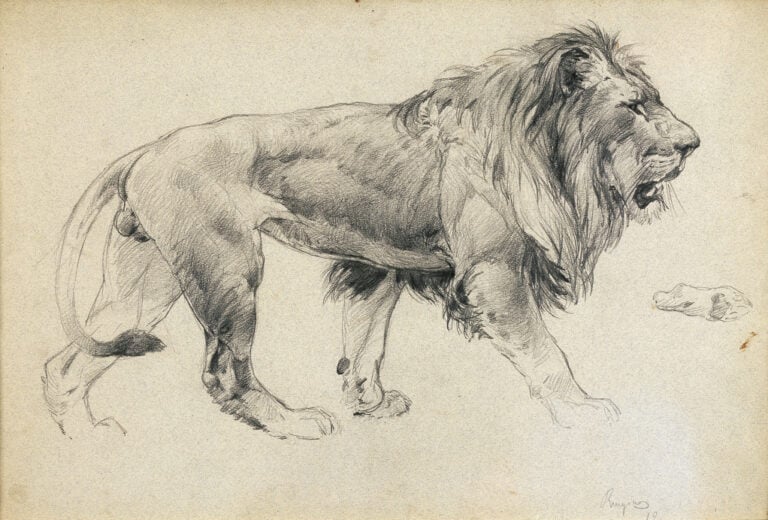
Though today he is best known for artworks created in Western Canada and the United States, Carl Rungius began his artistic career on the other side of the world. He was born in Rixdorf, Germany, a village near Berlin, in 1869, and as a young man he studied art at the Kunstakademie (the Royal Academy of Arts) in Berlin. Even as a student, he was deeply interested in the art of painting animals. This type of painting has a rich history in European art, one that is entwined with the history of hunting, which also intrigued Rungius. As a student, he took to sketching animals who lived in the Berlin Zoo, while also making time to study animal anatomy.
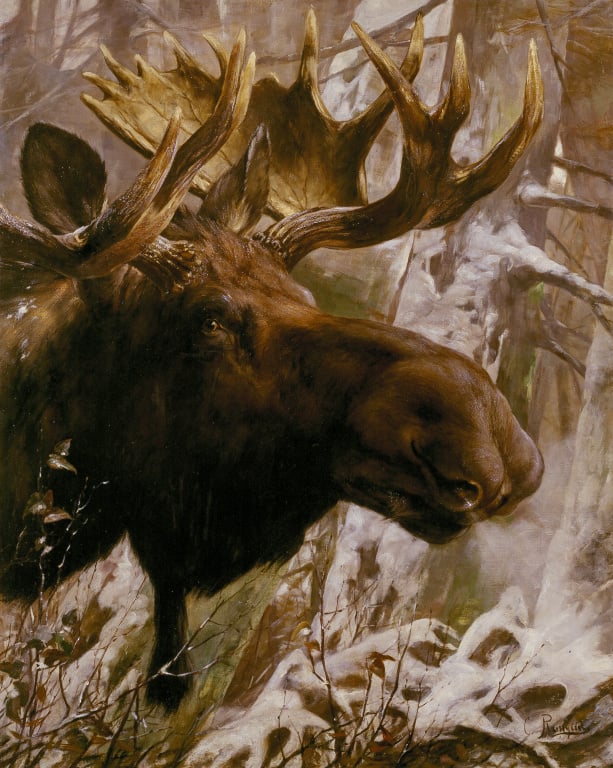
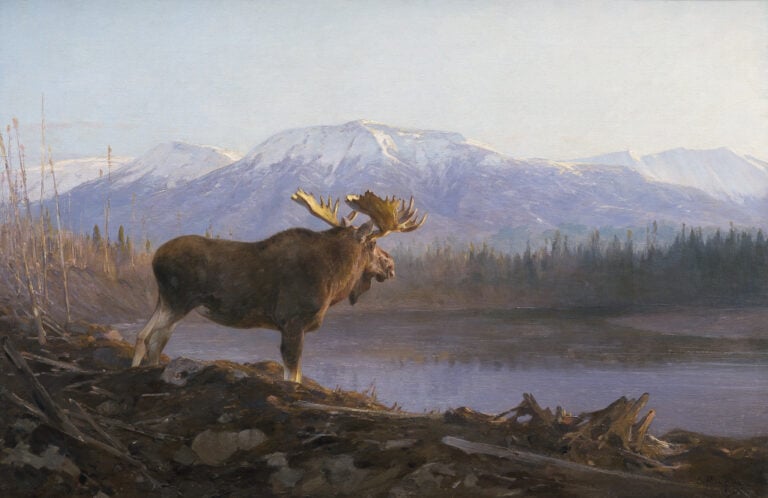
In 1894, Rungius travelled to New York with the goal of eventually going on a trip in the United States to hunt and paint big game animals. The first painting he did on this trip was Canada Moose. Though the composition is remarkably detailed, Rungius had never seen a living moose when he created this work; he based his painting on studies of a moose diorama he saw at the American Museum of Natural History.[1] Canada Moose attracted significant attention and helped Rungius launch his career in New York, where he settled permanently in 1897. The city became his home, but he regularly undertook painting trips, seeking out animals in places like Yellowstone National Park, Wyoming, and New Brunswick. Moose became one of his most celebrated subjects, and he depicted many in landscape settings, as can be seen in On Yukon Waters (On the Lakeshore).
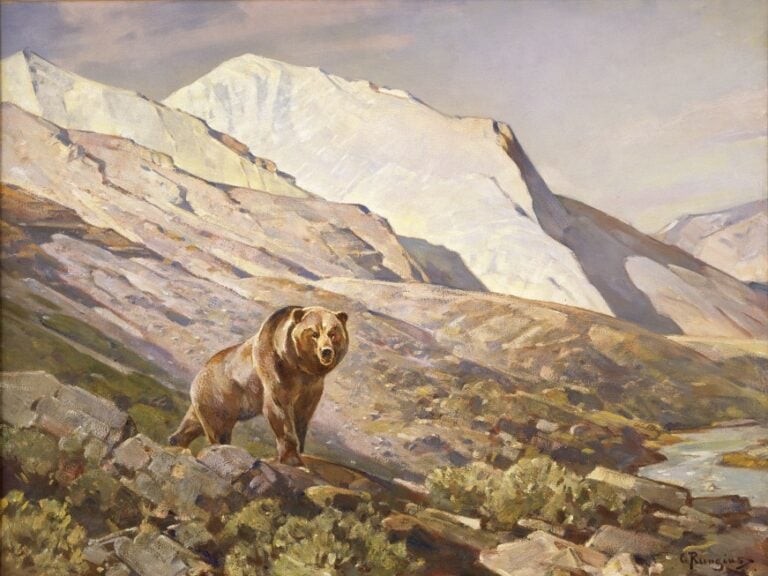
Rungius made his first trip to the Canadian Rockies in 1910. He was interested in visiting a region relatively unknown in the United States and intrigued by the possibility of hunting and painting bighorn sheep and mountain goats. His trip was a huge success, and he later set up a seasonal studio in Banff that he called “The Paintbox,” making regular visits until 1957. Explaining his process, he said, “Each summer I make lots of charcoal sketches of landscapes and animals in the mountains. You can’t paint too many of these. When I return to my Banff studio I make small oil sketches. Of course, I always know what I want to paint first….Nature is still the best teacher and I paint as I feel it. I think this is what makes a good artist.”[2] This practice served Rungius well for many years and he created many paintings of animals and mountains in the Canadian Rockies, such as Grizzly Bear In The Rockies (Clearwater Pass) and Caribou North of Jasper.
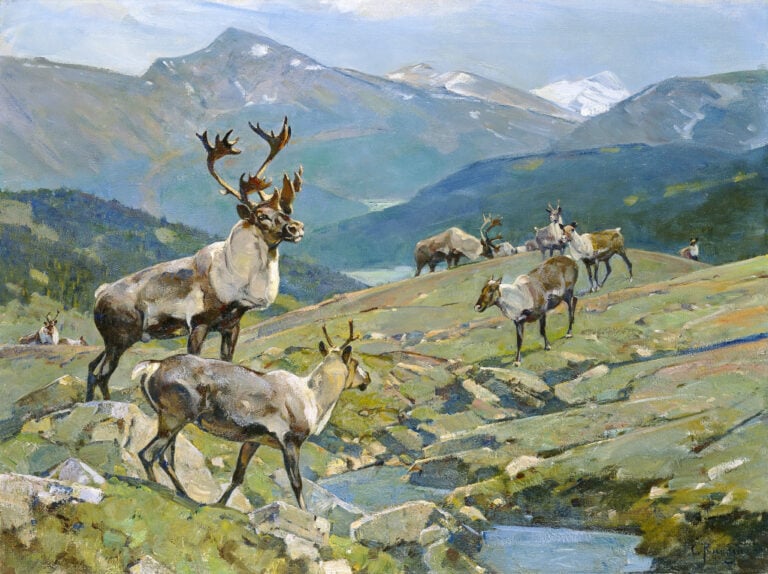
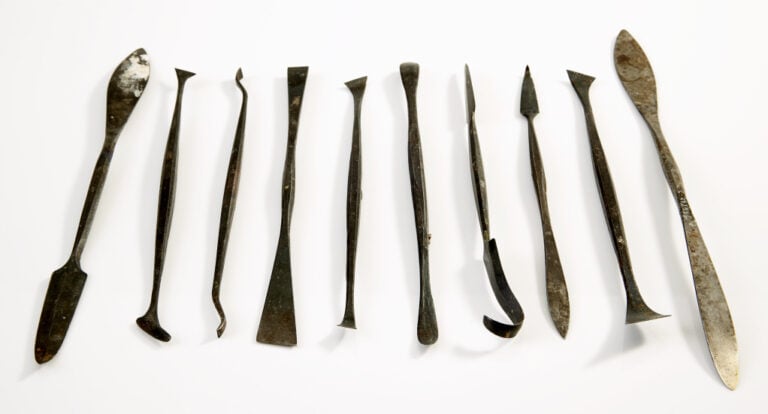
During these years, Eric Lafferty Harvie, the founder of Glenbow, met Rungius through a mutual friend and decided acquiring his works would be a priority for the collection Harvie was building through the Glenbow Foundation. Harvie purchased all the contents of Rungius’ Banff studio, and in 1958 he acquired everything from Rungius’ New York studio as well—the artworks, but also easels, palettes, and even brushes and sculpting tools.[3] At that time, Glenbow Museum had yet to be founded, but Harvie agreed the Glenbow Foundation could loan artworks to exhibitions.
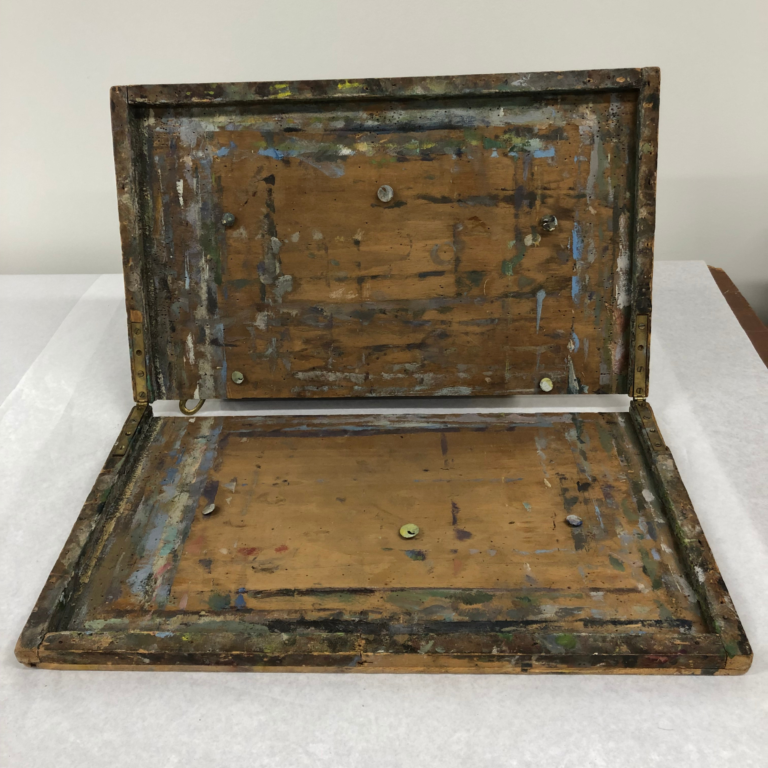
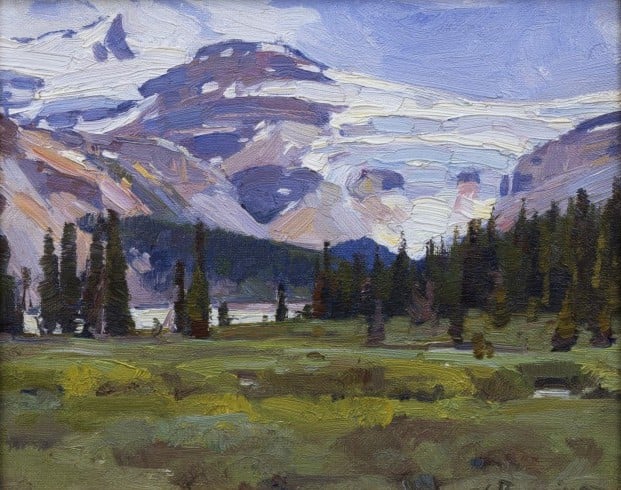
In 1957, the Calgary Allied Arts Centre at Coste House presented a retrospective of Rungius’s work that incorporated several works loaned from Glenbow—one of the earliest of many occasions when Glenbow would present Rungius’s art. The Calgary Herald published a warm review of the show noting that in addition to paintings, several drawings were on display. The critic declared, “To this viewer his drawings and quick rough sketches from which his large canvasses are developed have as great an appeal as his completed works. There is an excitement to be found in these works which is due to the spontaneity of a quick sketch made directly from nature.”[4] While we don’t know exactly which artworks this critic had in mind, Glenbow has many oil sketches by the artist, including several small paintings he did while he was based in Banff. For example, the preliminary study illustrated here was one of the sketches he used to compose the painting A Camp in the Rockies, c. 1925.
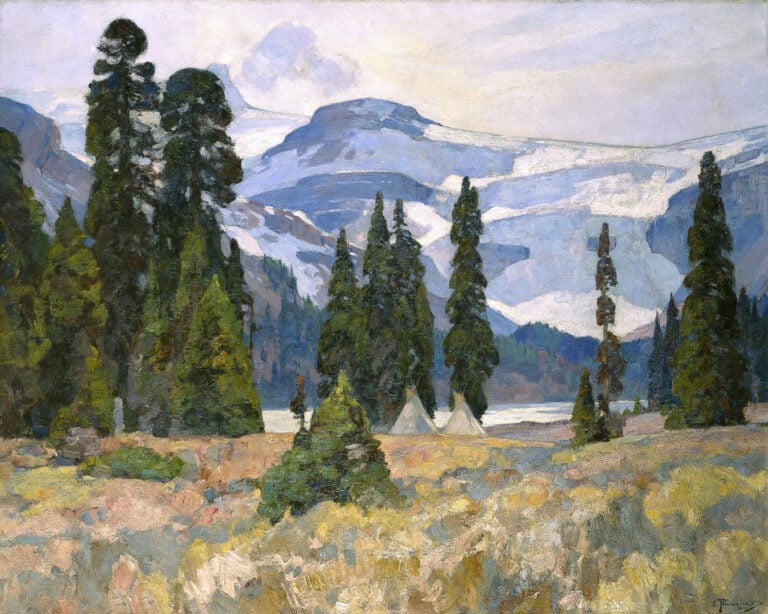
Rungius maintained his connection with Glenbow and the Harvie family until the end of his life; when he died in 1959, Eric Harvie’s son ensured his ashes were scattered in Banff.[5] Today, Glenbow holds over 2,500 artworks by Rungius, including paintings, drawings, prints, and sculptures, as well as his various studio tools. With such a strong collection of his work, the museum has been able to support many researchers studying Rungius, and we continue to learn more about his remarkable artworks.
References
[1] Carl Rungius: Artist & Sportsman (Calgary: Glenbow Museum, 2001), 29.
[2] Russell Elman, “Noted Wildlife Artist Awaits Return to Banff,” Calgary Herald, February 2, 1955, 17.
[3] Hugh A. Dempsey, Treasures of the Glenbow Museum (Calgary: Glenbow-Alberta Institute, 1991), 19.
[4] “Coste House Opens Officially Sunday,” Calgary Herald, September 14, 1957, 22.
[5] Carl Rungius: Artist & Sportsman, 11.
