June is Indigenous History Month: an opportunity to honour the knowledge, cultures, and contributions of Indigenous Peoples and reaffirm our commitment to truth and reconciliation.
To kick off the month, we sat down with Erica McMaster, Glenbow’s Curatorial Assistant, Indigenous Studies & World Cultures, to learn more about her role, connecting with community, and what to expect when the museum reopens.
Hello, Erica! Tell us a bit about yourself and your role at Glenbow.
My name is Erica McMaster and I am Glenbow’s Curatorial Assistant, Indigenous Studies & World Cultures. My role supports collections maintenance, exhibition development, and community relationships related to Glenbow’s Indigenous Studies and World Cultures collection.
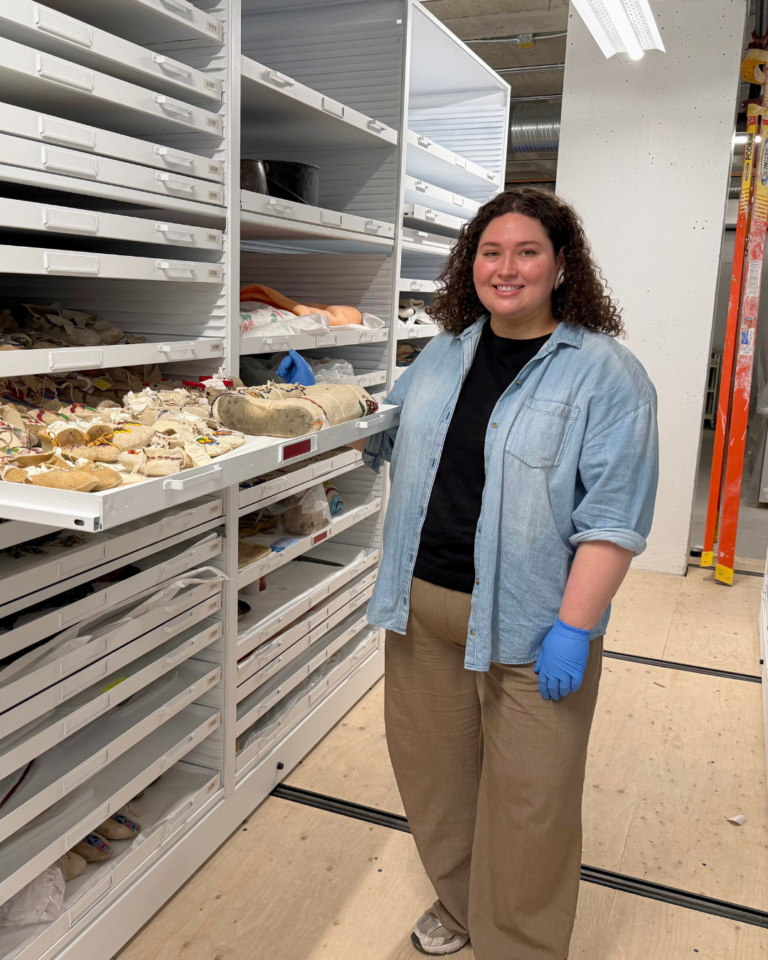
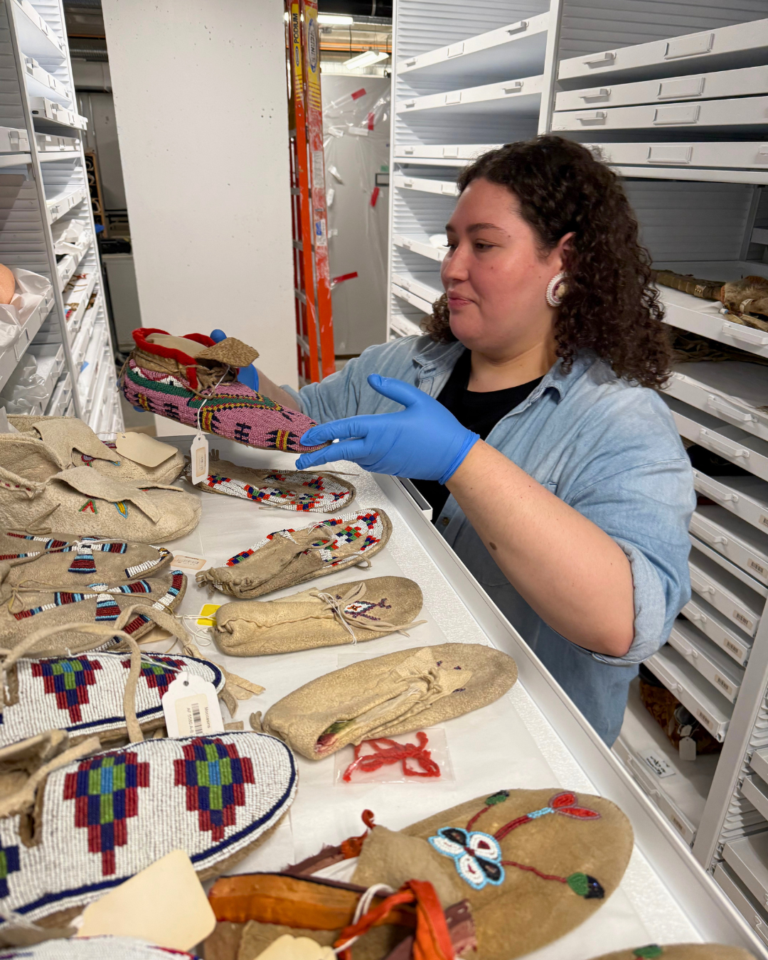
What has been most exciting or meaningful about your experience at Glenbow so far?
Since joining in January 2026, the most exciting and meaningful aspect of my time has been being part of a team of people who are enthusiastic and passionate about transforming Glenbow. In the Collections & Curatorial department, each team member is constantly working to collaborate with community, share impactful stories, and make art and culture accessible to all.
What are some things you’ve been reflecting on in this role?
I’ve been reflecting on what it means to steward a vast collection of Indigenous artworks and belongings in ways that deviate from colonial approaches. In particular, I think about the ways museums can embrace culturally sensitive and culturally informed methods of collecting, and how that can shape relationships between Indigenous communities and museums moving forward.
What role does collaborating with community play in Glenbow’s curatorial work?
Community collaboration is at the core of so much of Glenbow’s curatorial work. We maintain relationships with Elders, Knowledge Keepers, and artists that allow us to build our knowledge of the collections we steward and learn how to present Indigenous art and belongings in an accurate and respectful way.
In particular, we work very closely with Blackfoot Elders and Knowledge Keepers from Siksika, Kainai, Amsskaapipiikani, and Apatohsipiikani. These relationships support the rights of Indigenous Nations to tell the stories of their people and histories on their own terms.
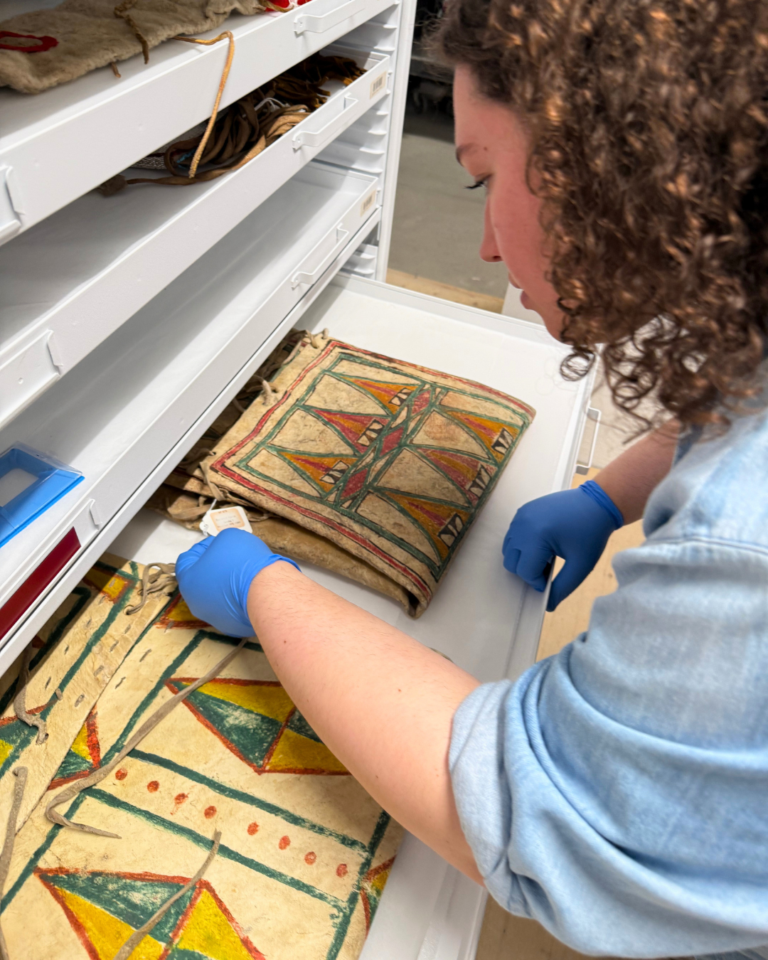
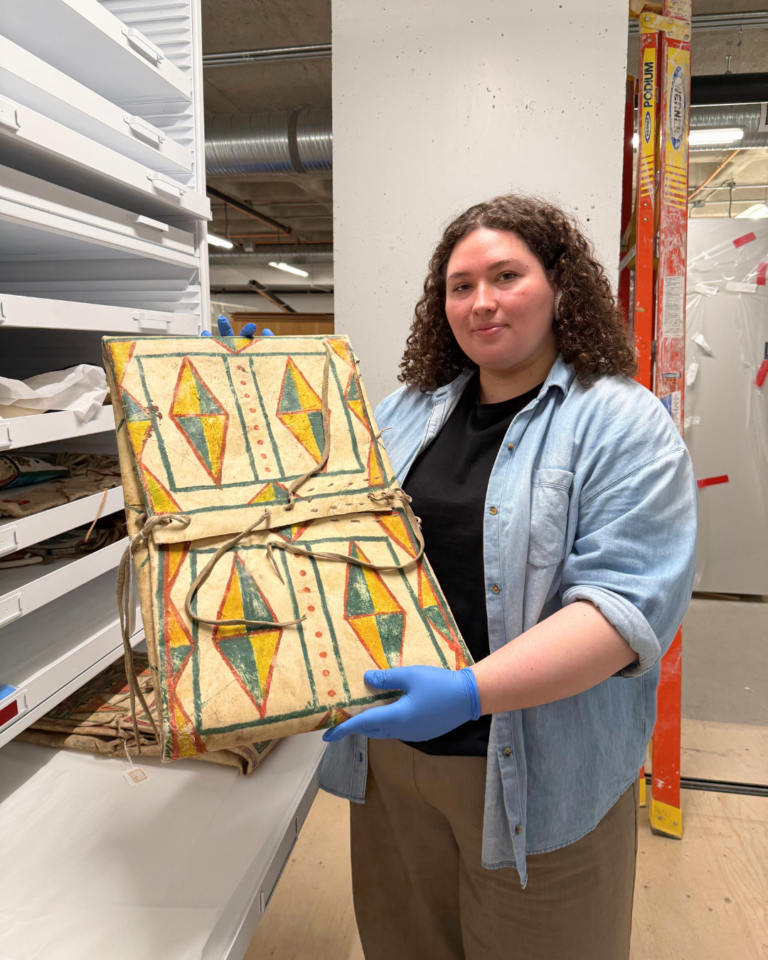
Are there specific artworks, objects, or belongings in Glenbow’s collection that have resonated with you since you began your role?
As a member of Siksika Nation, I have naturally gravitated toward the art and belongings from Siksika that we steward in the collection. Having the privilege of stewarding belongings I can trace back to my community and connect to family reinforces that Glenbow’s collection is a living, breathing body of precious stories and histories.
I also really love the parfleche – embellished rawhide containers used to carry food and tools – we have in the collection. For me, parfleche is an example of how objects made for functional purposes in many different Indigenous communities were created with great craftsmanship and pride, and how designs painted on the parfleche were a personal reflection of the artist’s culture.
What are you most looking forward to about the revitalized museum?
I am most looking forward to showcasing the diversity of our collections through our new exhibitions, including our new Blackfoot Gallery, which has been curated by Elders from Siksika, Piikani, Kainai, and Blackfeet Nation in Montana, with Indigenous curator and scholar Gerald McMaster.
There is an opportunity for everyone who walks through the doors to spark conversation, challenge narratives, and simply appreciate the beauty of art.
