Toronto artist An Te Liu (b. 1967) has created everything from enormous installation works to letterpress prints, but he is perhaps best known for his work in ceramic and bronze. In our latest artist profile, learn about how his interests in consumer goods and art history have inspired his unique approach to sculpture.
A highly acclaimed sculptor, An Te Liu has developed a practice grounded in longstanding interests in art, architecture, and history. In his early career, he completed a BA in Art History and Renaissance Studies at the University of Toronto and an MA in Architecture at the Southern California Institute of Architecture. After graduating, he spent years working in architecture and design before gradually building a practice in sculpture. In 2000, he had his first solo exhibition, presented by the Contemporary Art Gallery in Vancouver. With this show, he brought his practices as artist and architect together, presenting artworks that explored themes of tremendous significance to architects, including machines made for the home and forms and patterns found in urban environments.[1] He would return to these themes in many future artworks.
While Liu’s early sculptures often integrated consumer goods such as humidifiers and air purifiers, he later became interested in the materials used to package consumer goods, particularly polystyrene (often called Styrofoam). He collected pieces of discarded packaging he felt had striking forms, and he used these forms as the foundations for his sculptures, which evoke both the discarded packaging, and, more distantly, the original goods held by the packages. As Liu explains, “In working with polystyrene packing, I have been dealing with objects of global mass consumption but also objects that are no longer present. Instead, they are just traces and impressions left behind, some decipherable, some not. They are already casts or fossils of things, which are then carved up and recast. The object is absent but it is recalled in another form. The object fades quickly, but its casing persists. In turning foam into ceramics and bronzes, I am kind of trading one form of permanence for another.”[2]
For the viewer, there is something uncanny about the sculptures. With a work like Loki, it’s not quite clear what could have made the shapes we see, though the bumpy surface reminds us of the polystyrene Liu used to make the work, and, by extension, the polystyrene’s original purpose. Long after someone threw the polystyrene away—and possibly long after the item it once held has been thrown away—Liu’s sculpture brings those into the present in a powerful ceramic.
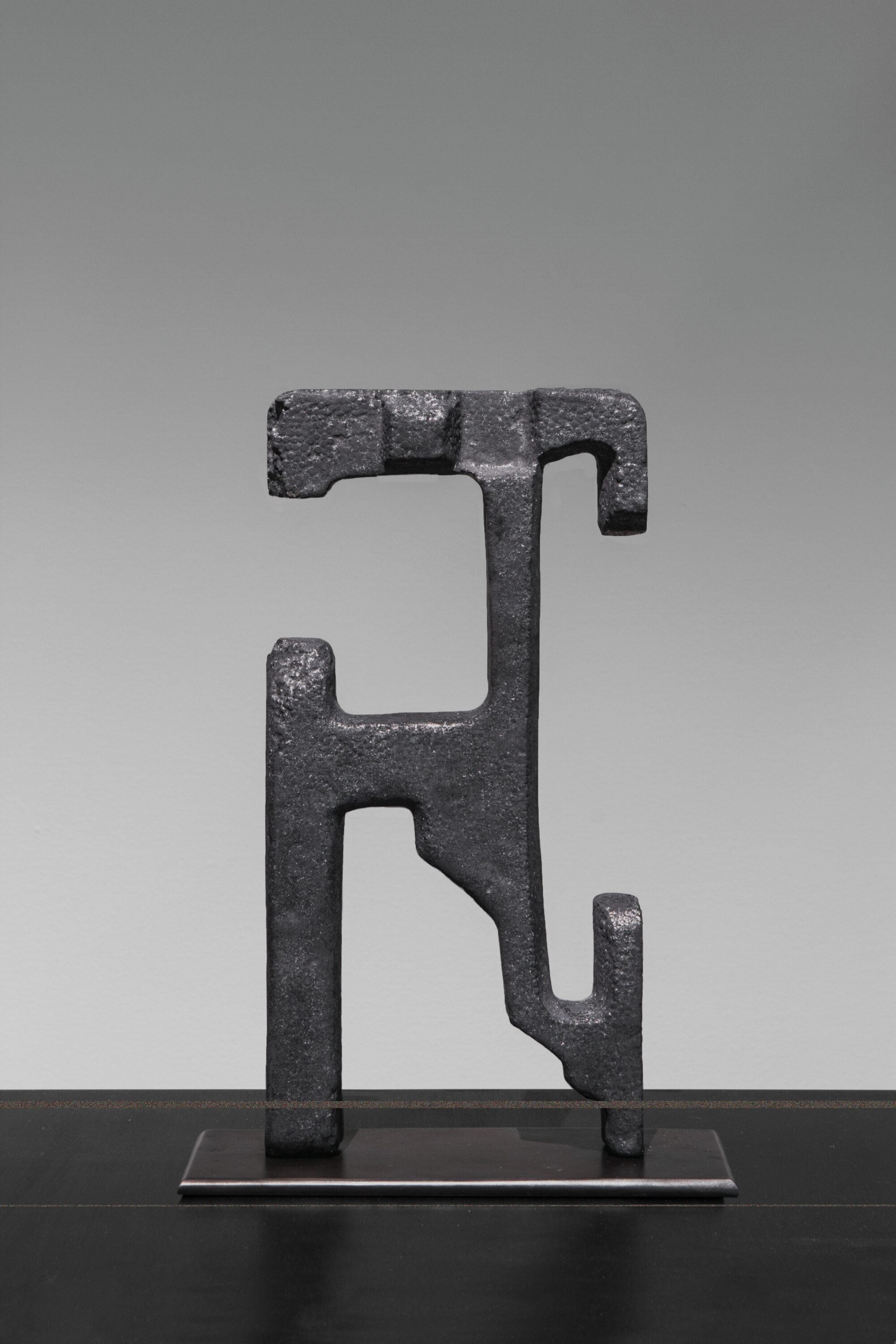
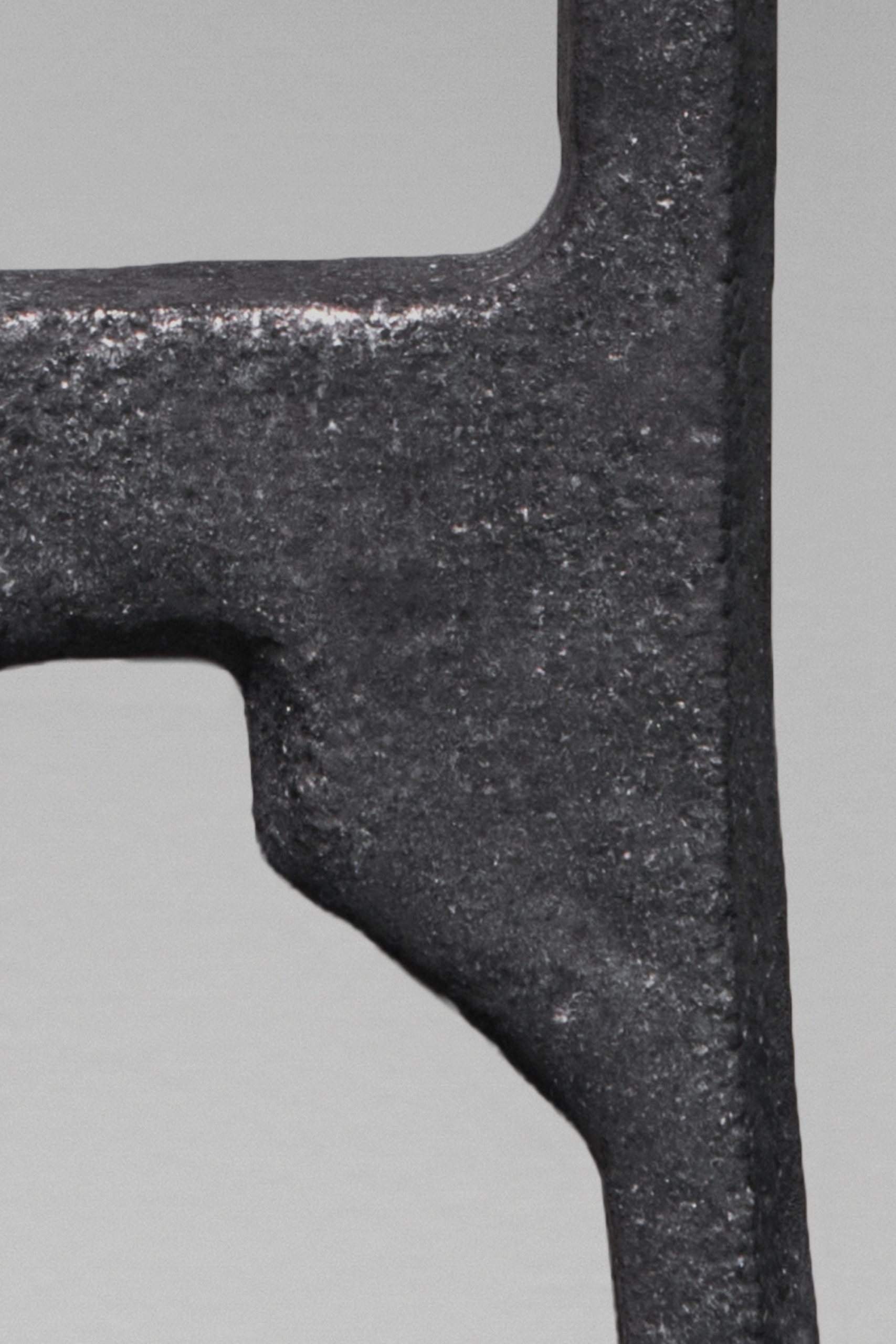
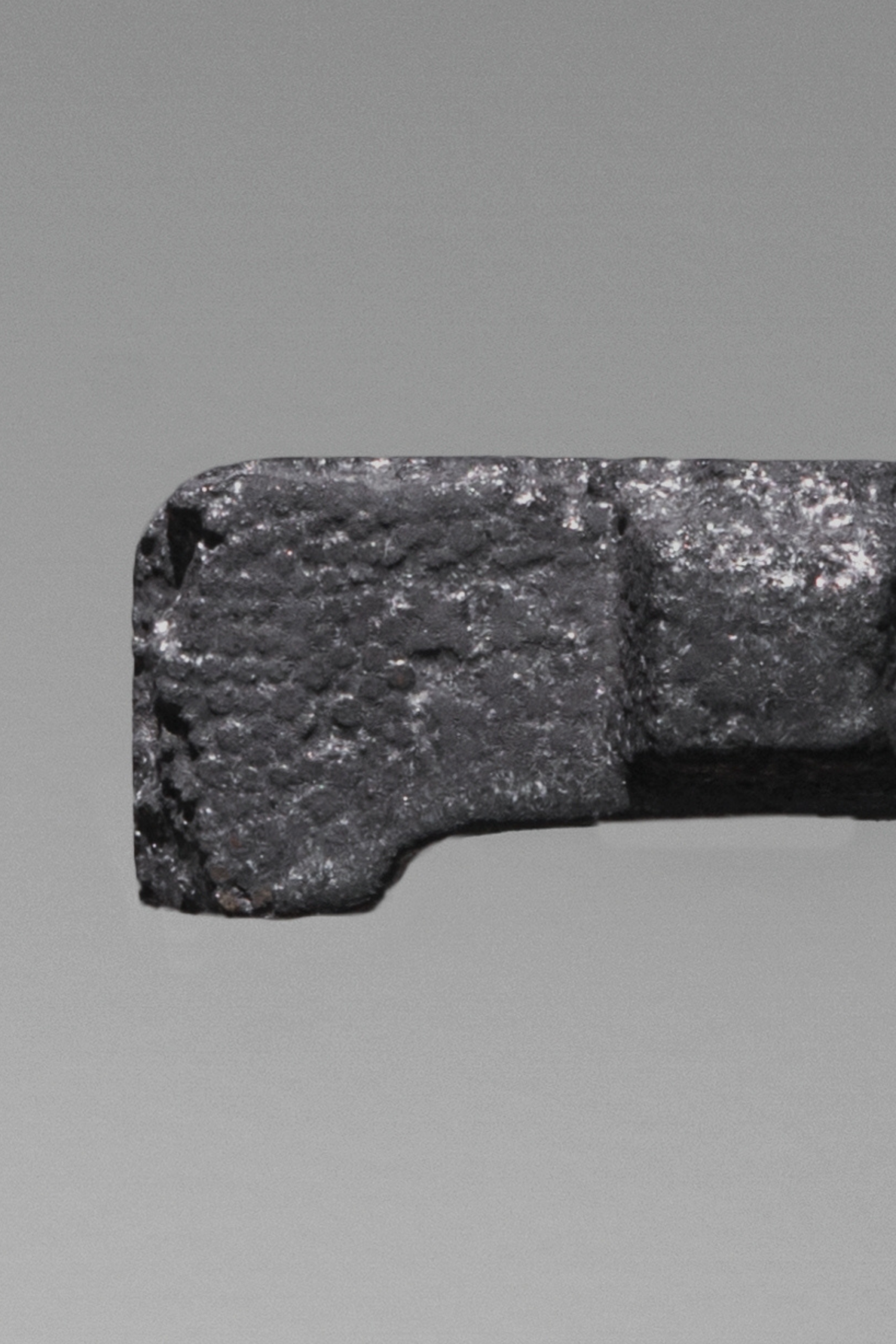
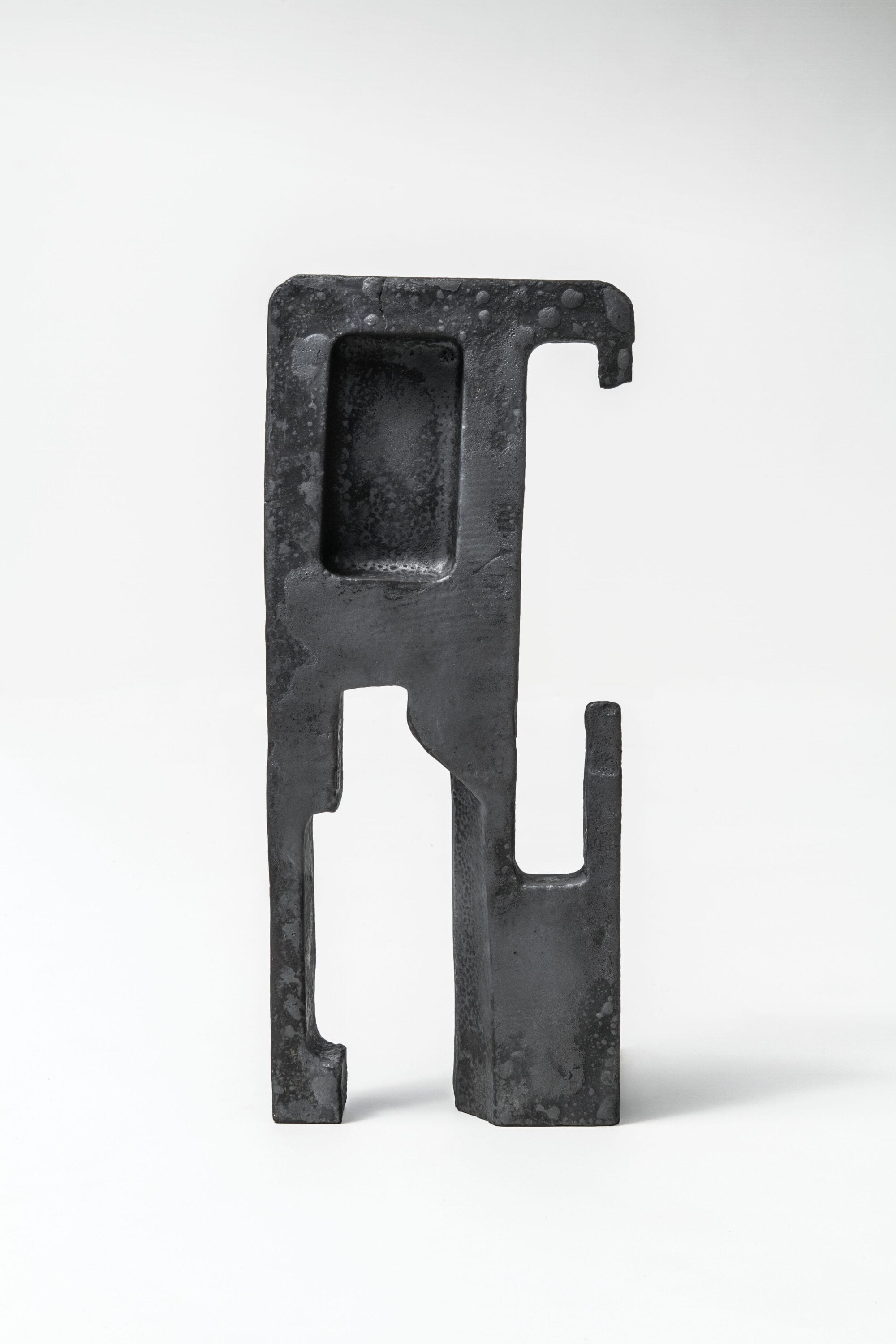
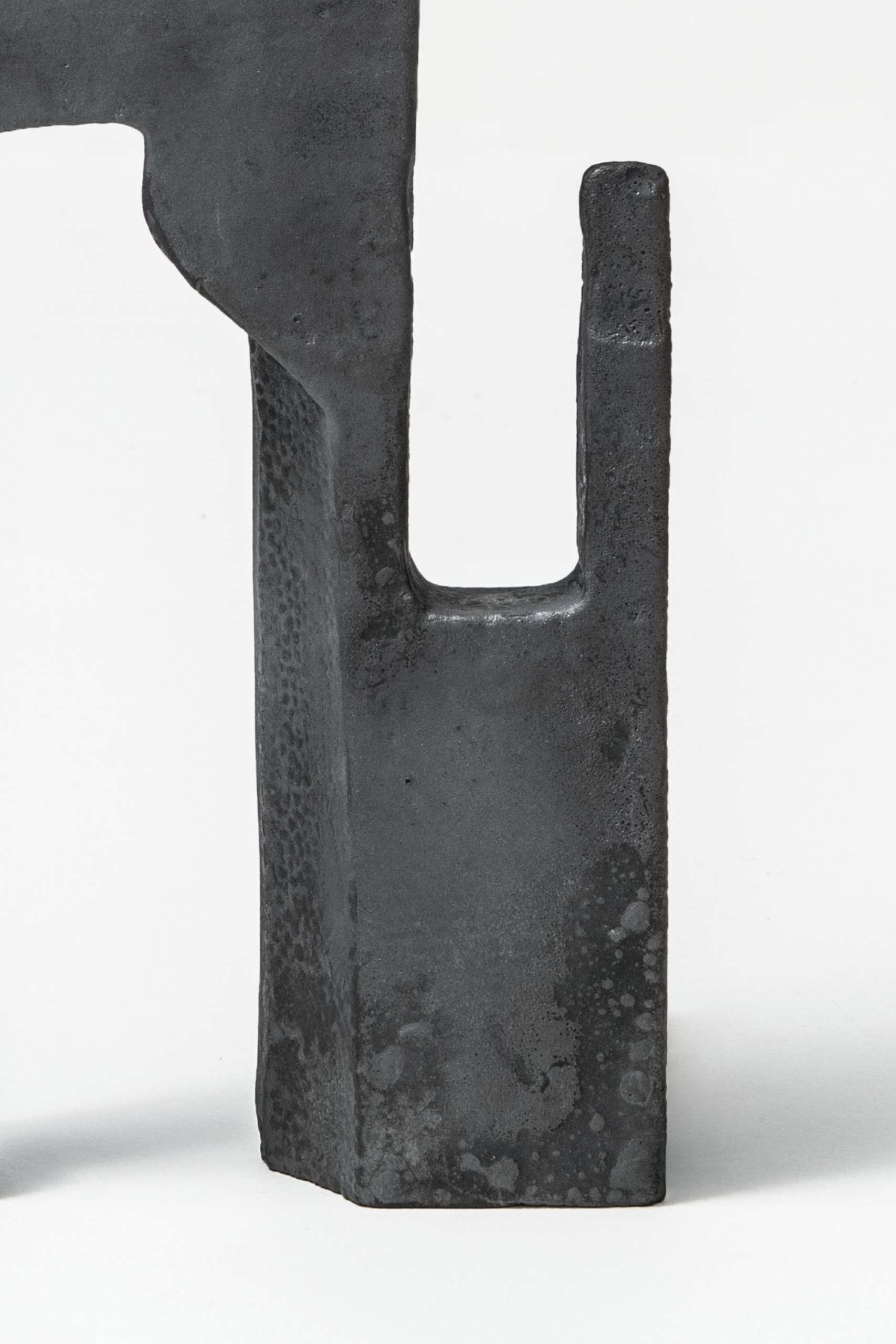
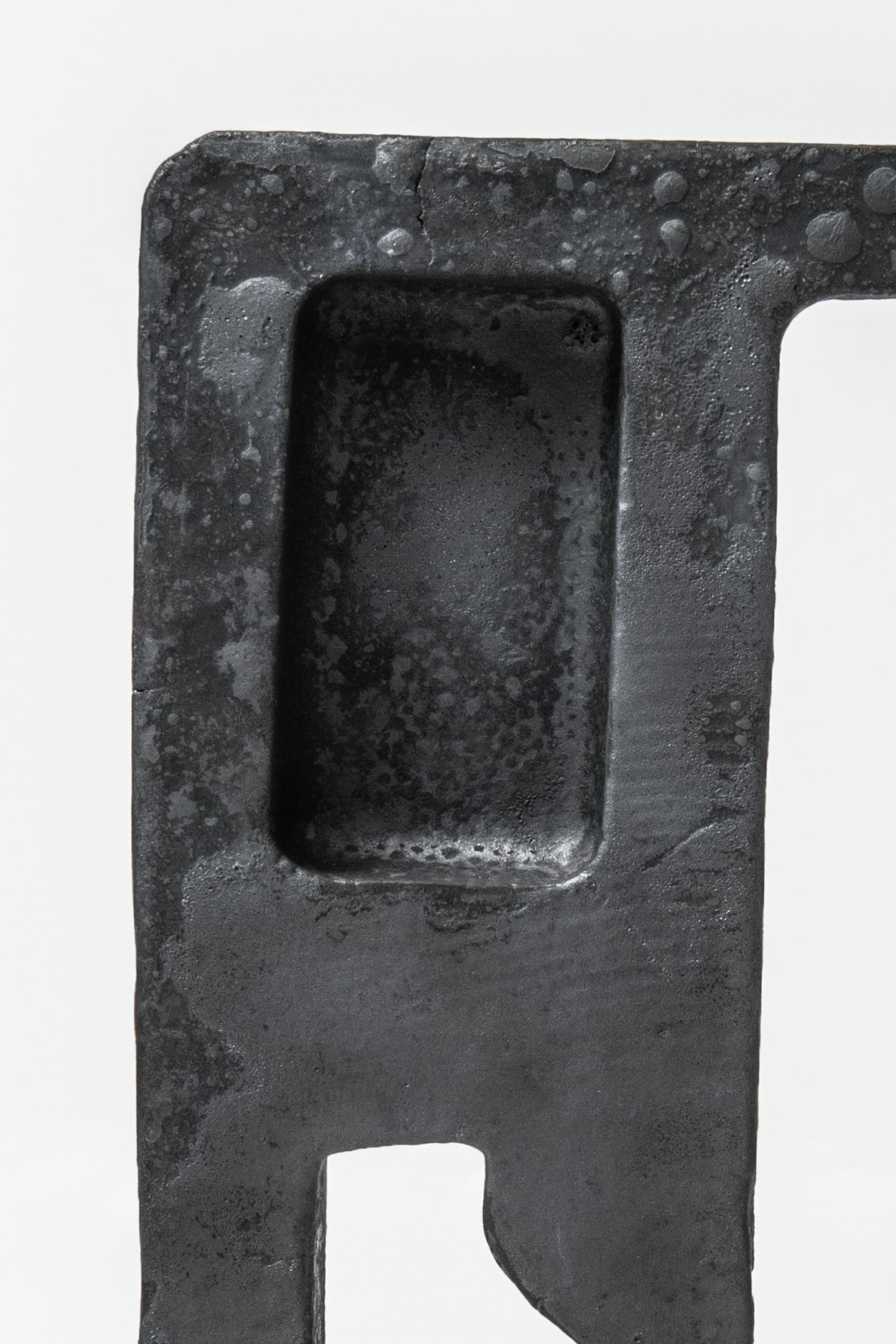
For Liu, the power of works like Loki, Trickster, and Passage is not only the unique process by which they were made, but also their striking forms. Like many of the artist’s works, these sculptures evoke works by some of the most famous sculptors in the twentieth century, including Henry Moore (1898–1986), Isamu Noguchi (1904–1988), Constantin Brâncuși (1876–1957), and Barbara Hepworth (1903–1975), all of whom were associated with Modernism in sculpture from the 1920s through the 1950s—an era when sculptors were known for experimenting with abstract forms. These artists were important sources of inspiration for Liu, and critics were quick to recognize the connection in his work; for example, on seeing one of Liu’s exhibitions, Murray Whyte declared “The high-modern references are everywhere.”[3] Looking at works like Passage alongside sculptures like Bird in Space by Brâncuși makes the visual relationship clear.
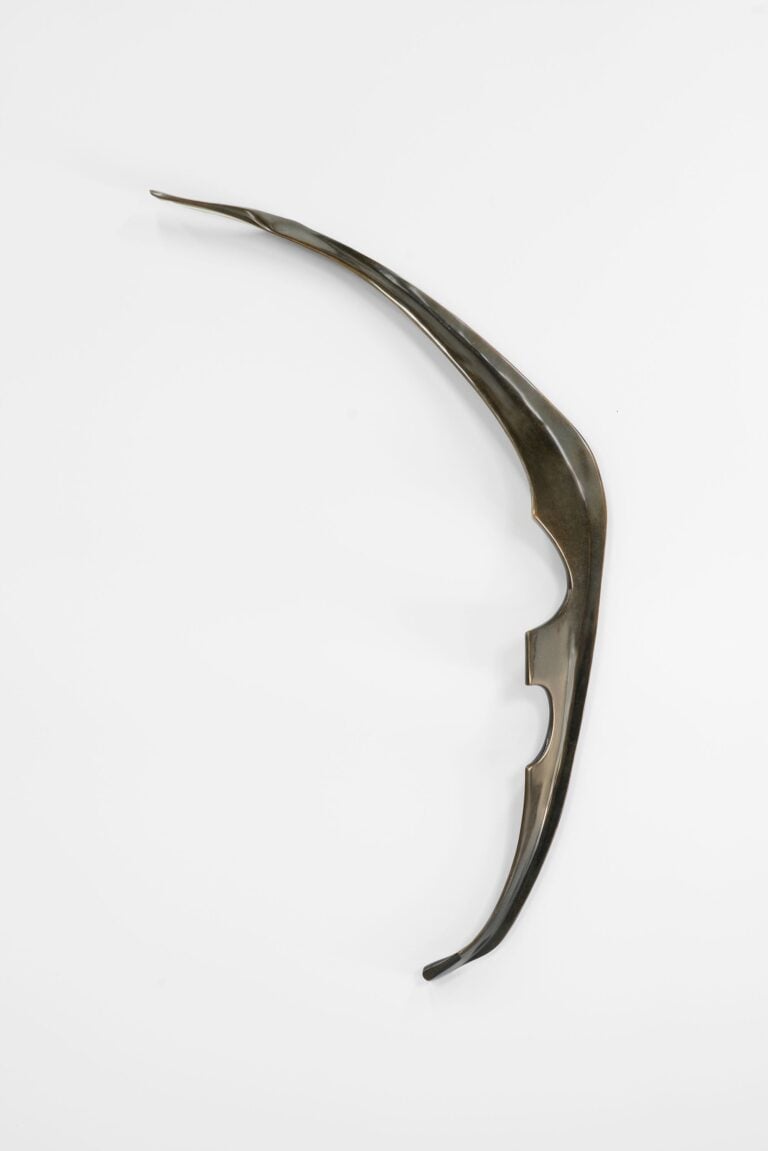
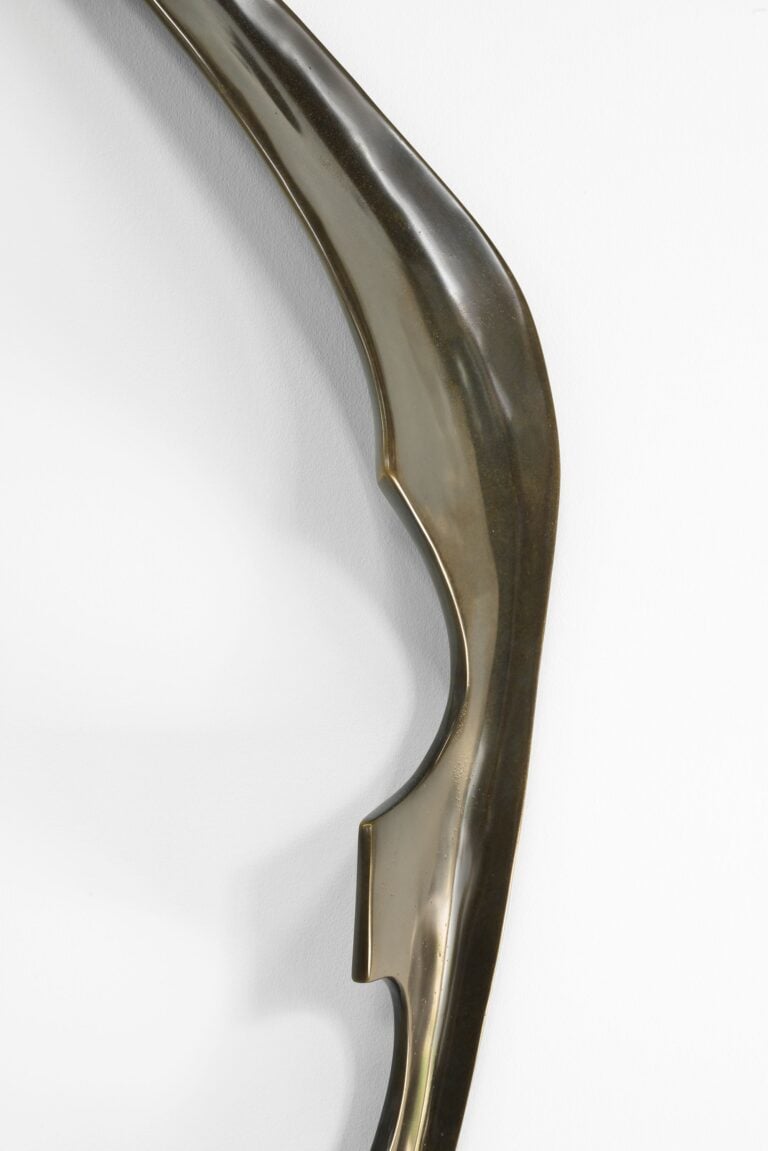
By bringing together references to global consumerism and art history, Liu creates a distinctive tension in his sculptures. Discussing one of his exhibitions in 2017, Leah Ollman noted, “Though endowed with the aura of art historical touchstones or even older relics, Liu’s forms are inescapably of the present.”[4] Beyond this tension, his sculptures are also the reflection of a creative practice that has come full circle, from art history to architecture and design to contemporary sculpture and back, and that has laid a foundation for remarkable work in the future.
References
[1] “An Te Liu: Pathology,” Contemporary Art Gallery, 2000, https://cagvancouver.org/exhibition/an-te-liu.
[2] An Te Liu, in An Te Liu (London: Black Dog Publishing, 2015), 137.
[3] Murray Whyte, “Unpacking the Modern,” Toronto Star, September 8, 2013, E5.
[4] Leah Ollman, “Lasting forms for modern life’s castoffs,” Los Angeles Times, July 12, 2017, E3.
