One of the most important artists in the history of Alberta, Marion Nicoll (1909–1985) is celebrated for her abstract paintings, her innovations in craft, and her leadership in the Calgary community. In Glenbow’s latest artist profile, learn more about how her approach to painting evolved.
Marion Nicoll was determined to be an artist from a very young age: even as a child, she was passionate about drawing. After she left high school, she studied at the Ontario College of Art (today OCAD University) and then at the Provincial Institute of Technology and Art (today Alberta University of the Arts). There she went on to become an instructor, and though she left the Institute for study abroad trips and in the early years of her marriage, she taught for over 20 years, inspiring hundreds of students. As an artist, she worked in a wide range of media, including painting, printmaking, and batik. Today, she is best known for her work in abstract painting — she was one of the first artists in Alberta to work in abstraction, and it became central to her legacy.
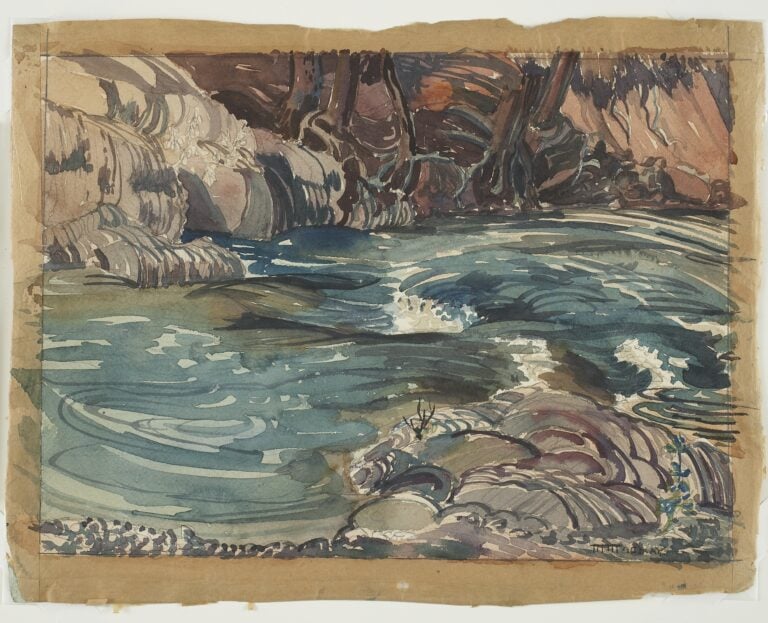
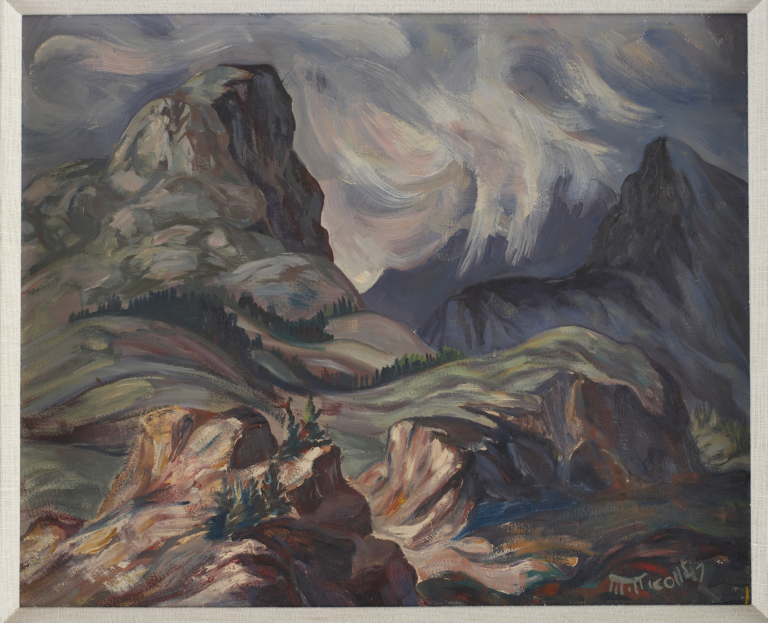
In her early career, Nicoll painted numerous landscapes, working in oil and watercolour. She was interested in Modernist approaches to Canadian landscape and admired Emily Carr’s landscapes depicting British Columbia. In the late 1940s, however, Nicoll’s practice changed dramatically. From 1946 to 1947, she taught with Jock Macdonald at the Banff School of Fine Arts and the Provincial Institute of Technology and Art, and he introduced her to automatic drawing and watercolour. In the automatic technique, the artist holds a pencil or paintbrush above a paper and allows their hand to move without conscious thought, such that the image created comes from the subconscious mind. For Nicoll, automatic artmaking was transformative. She found it powerfully inspiring and restorative, and was surprised by the works she made. Discussing her process, she stated, “It was an inside source that you gathered from outside and it was at your subconscious level and the automatic drawing brought it out.…nothing that you’ve seen or touched or smelt is lost, it’s all sorted in the subconscious…I did things that really shocked me.”[1] Nicoll created dozens of automatics, filling sketchbooks with automatic drawings and using watercolour for automatic paintings.
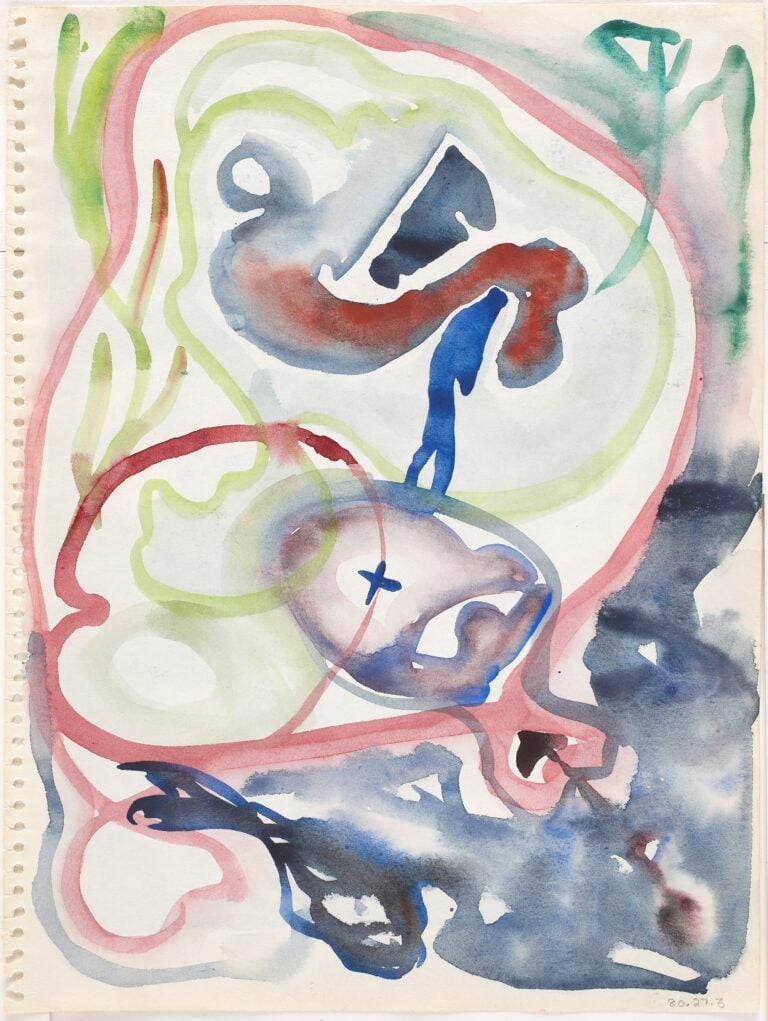
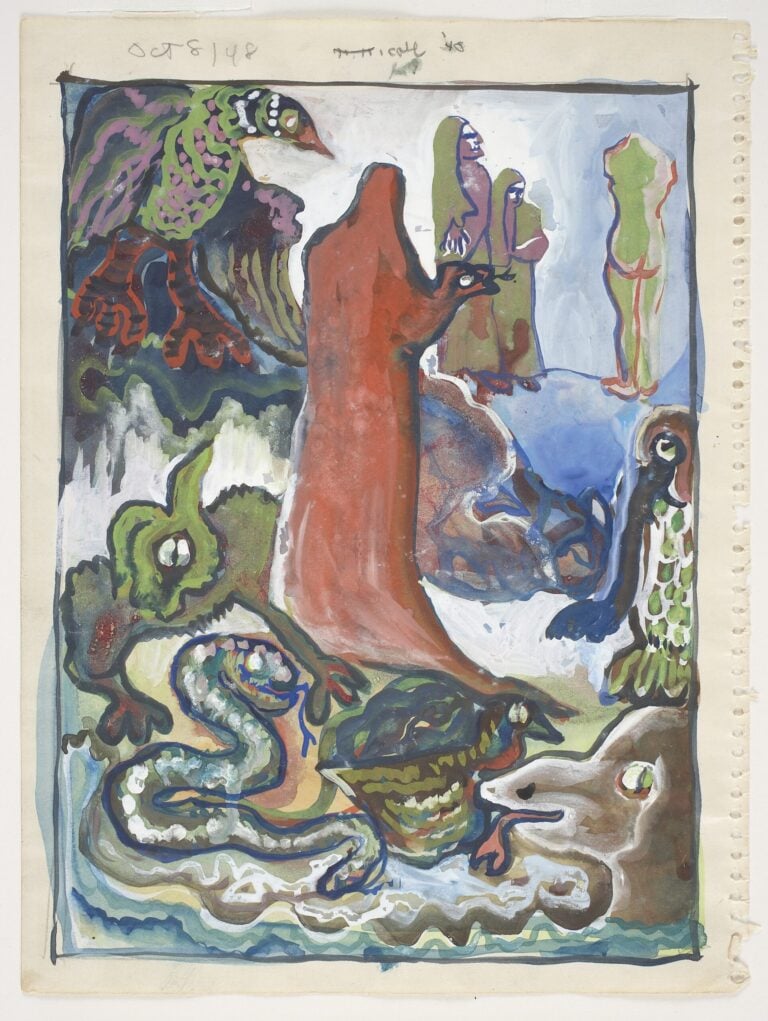
Nicoll’s automatic works became pivotal to her future painting: reflecting on her art with John Hall and Ron Moppett, she said the automatic works “gave me assurance. I’m absolutely sure now that I have a place on which I stand, from which I can paint.”[2] From this foundation, a turning point occurred when she attended a summer art workshop at Emma Lake in Saskatchewan in 1957. The workshop was led by American artist Will Barnet, and the intention had been to focus on printmaking — but when the printmaking equipment did not arrive, Barnet set up exercises in painting instead. While studying the model, Nicoll began creating increasingly abstract compositions. Looking back on the workshop, Nicoll remembered, “there was something electric.… The whole place just quivered.… And I just took off!”[3] Inspired by this new direction in her work, she arranged to take leave from teaching at the Institute and she and her husband, artist Jim Nicoll, travelled to New York in 1958 for several months of studying and painting. During their visit, Nicoll received a Canada Council grant, and this enabled them to travel to Europe for further creative research before they returned to Calgary. By the time they arrived home in 1959, Nicoll had committed herself to what she called “classical abstractions”: abstract paintings defined by crisp lines, flattened planes of colour, and no recognizable subjects — but were still grounded in Nicoll’s experiences. She presented her first major paintings in a solo exhibition in 1959.
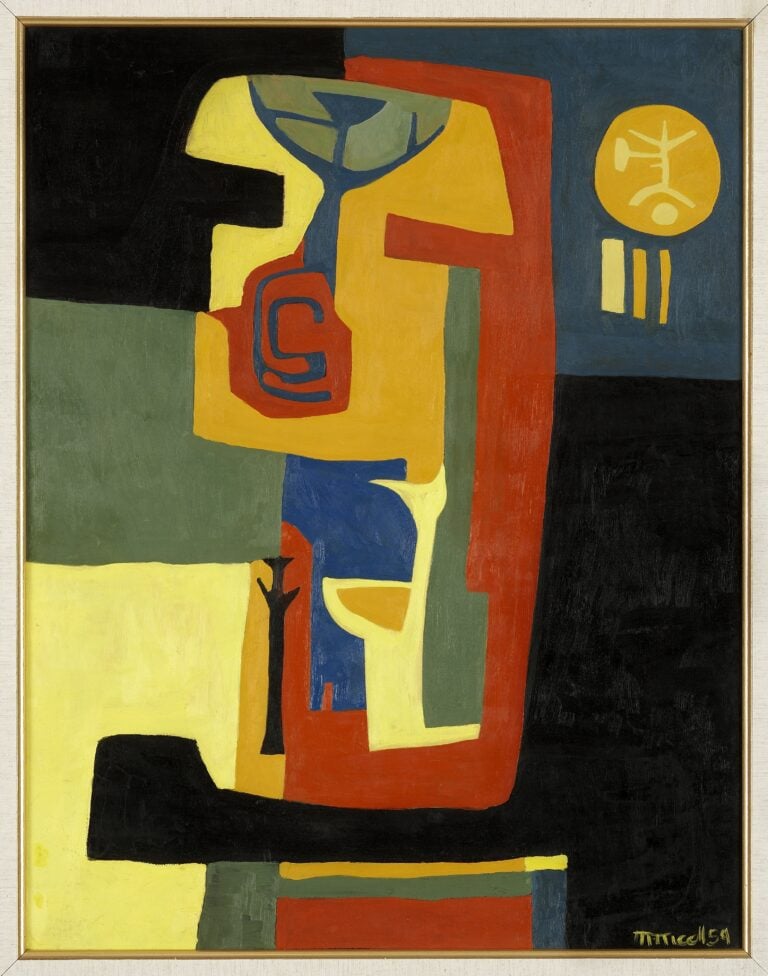
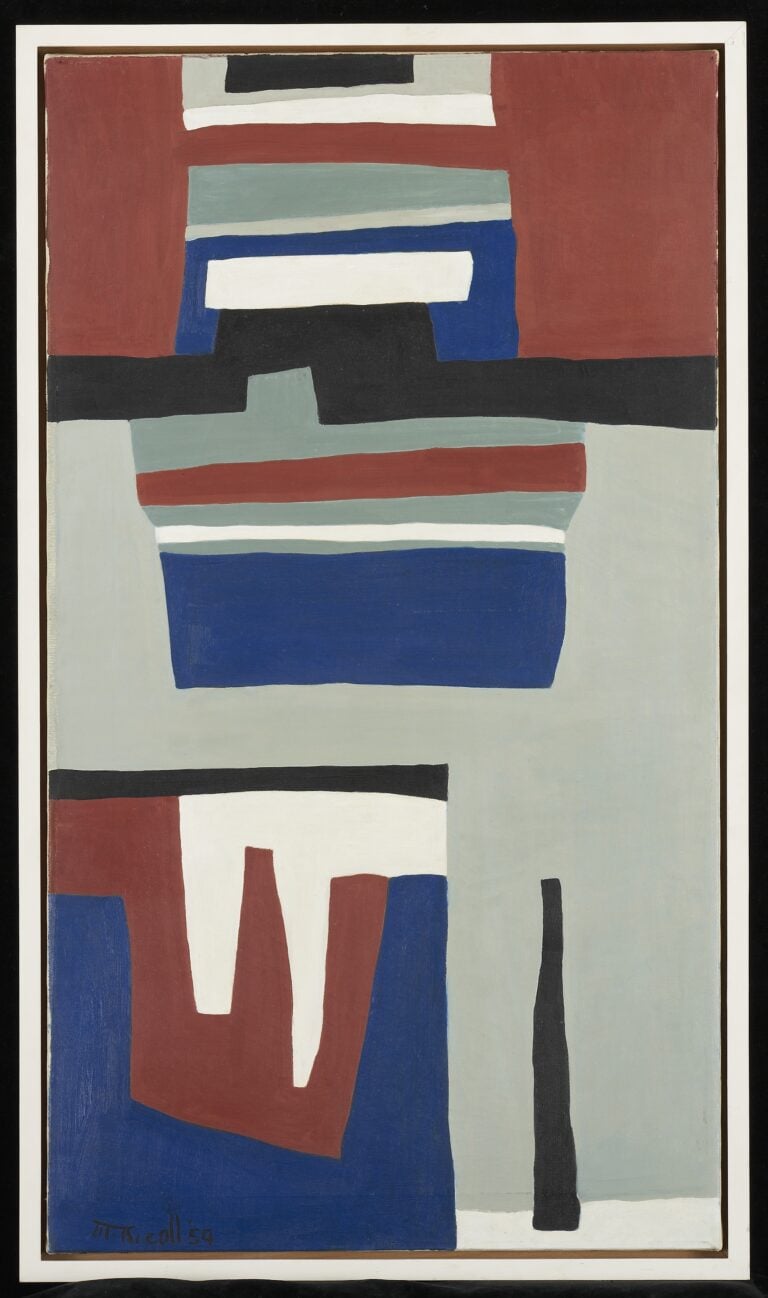
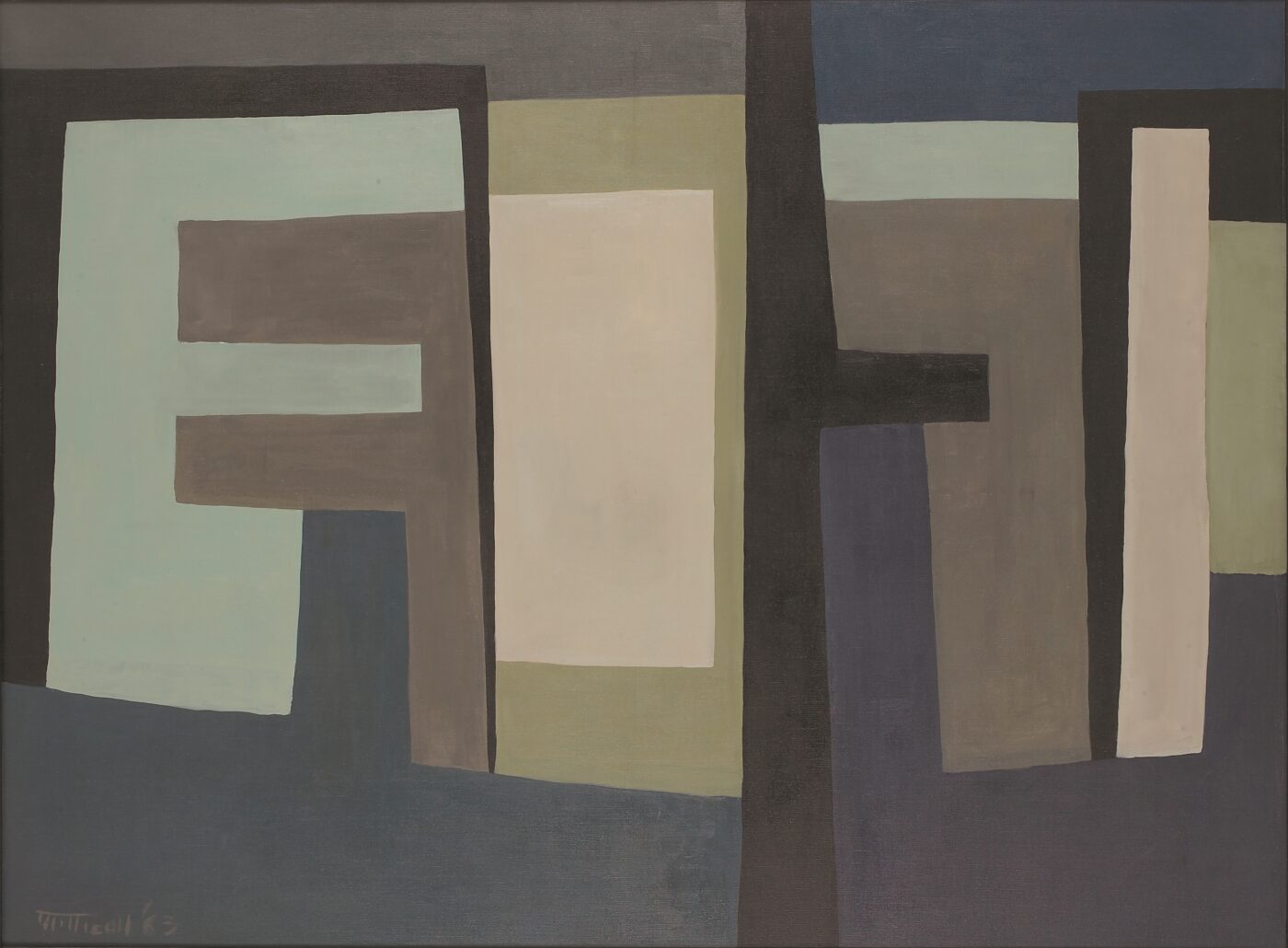
Nicoll continued to explore abstract painting until the early 1970s. The works she completed in the 1960s are among her most celebrated achievements, and in them Nicoll further developed her distinctive approach to abstraction. For her, a painting had to be grounded in her lived experience; many of her paintings have titles that hint at what had inspired her composition. For instance, Bowness Road, 2 a.m., 1963, alludes to her neighbourhood in Calgary — and perhaps to one of the late-night parties she and Jim Nicoll were famous for hosting. Nicoll painted several works inspired by places, in some ways bringing her painting practice full circle, though stylistically her final paintings could not be more different from her early landscapes. In 1966, she left teaching so she could focus on her art, which she did for about five years before arthritis forced her to retire. By that time, her work was deeply admired by her artistic peers in Calgary and had received significant national attention. In 1977, she became a member of the Royal Canadian Academy of Arts, an honour that celebrated her achievements and confirmed her place in the country’s art history.
References
[1] Marion Nicoll, quoted in Catharine Mastin, Marion Nicoll: Life & Work (Toronto: Art Canada Institute, 2022), 10–11.
[2] Marion Nicoll: A Retrospective, 1959 – 1971 (Edmonton: Edmonton Art Gallery, 1975), n. p.
[3] Marion Nicoll, quoted in Ann Davis and Elizabeth Herbert, Marion Nicoll: Silence and Alchemy (Calgary: University of Calgary Press, 2013), 1.
